Using Goat Milk Powder in Hot Process Soap (The Easy Way)
Why Use Goat Milk Powder in Hot Process Soap?
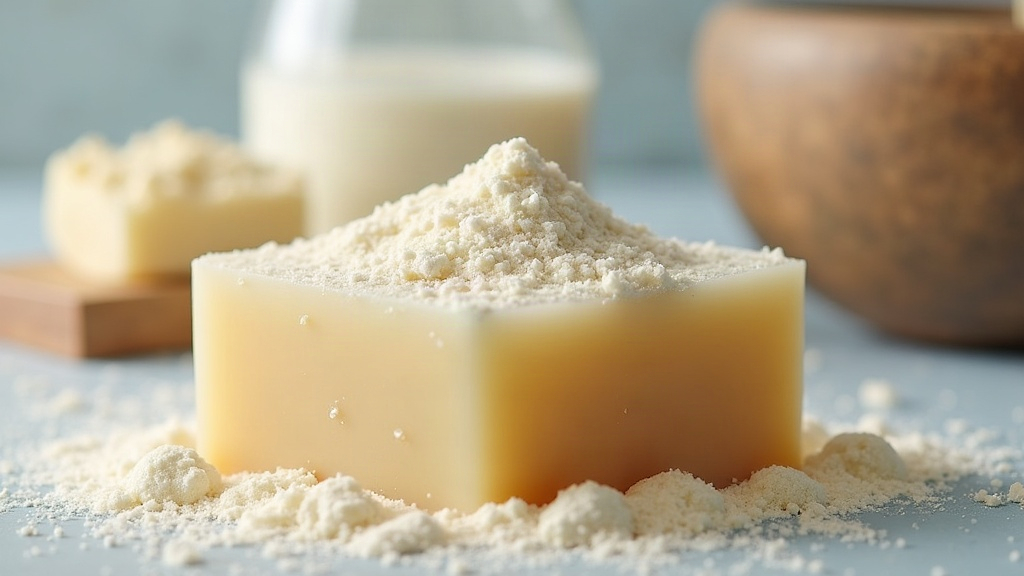
Goat milk is one of the most loved add-ins in handmade soap, and the powdered form makes it so much easier to work with, especially when you’re doing hot process. Liquid goat milk has to be frozen into cubes first, or dribbled in slowly so it doesn’t scorch. Powdered milk skips all of that. You still get the same creamy, mild bar, just with a lot less babysitting.
This article walks through exactly how to add goat milk powder to hot process soap: how much to use, when to add it, and how to dodge the clumping and scorching that trips up so many beginners. By the end you’ll have a method you can repeat batch after batch for a rich, moisturizing, pleasantly mild bar.
Why Goat Milk Powder Beats Liquid Milk in Hot Process
Hot process soap cooks at 150-180°F (65-82°C), hot enough to scorch the natural sugars in liquid milk and turn your batch an unappetizing brown with a burnt-sugar smell. Powdered milk sidesteps that problem completely:
- No freezing required. Liquid milk needs to be frozen into cubes or added in careful drips; powder just stirs in.
- No scorching, no smell. Since you add the powder at the very end, it never sits on heat long enough to burn.
- Predictable water ratios. Liquid milk eats into your water amount and complicates lye math; powder doesn’t touch that calculation at all.
- Longer shelf life. A bag of milk powder sits happily in the pantry for months, so it’s always ready when you need it.
How Much Goat Milk Powder to Use
The question every soaper asks first: how much? A solid starting point is 1 tablespoon of goat milk powder per pound (454 g) of oils, which works out to roughly 1-2% of your total oil weight. So for a standard 2-pound (908 g) batch, you’re looking at about 2 tablespoons total.
Stay on the low end for your first try. Overdo it and the bar can turn slightly soft, lather less, or carry a faint “cooked milk” smell even in hot process. You can always nudge the amount up in small steps once you’ve seen how a batch behaves and cures.
When and How to Add Goat Milk Powder
Timing matters more than almost anything else here. Add the powder after the cook, once the soap has thickened to that classic mashed-potato texture and stops zapping on a pH test. This is the post-cook stage, the same moment you’d normally stir in superfat oils or fragrance.
Here’s the sequence:
- Finish the cook completely. The batch should look translucent and glossy, and it needs to be zap-free before you add anything else.
- Let it cool for a minute or two. Dropping to around 140-160°F (60-71°C) off the heat gives the powder room to blend in without scorching.
- Sift the powder in. Sprinkle it through a fine-mesh strainer while stirring the whole time. Sifting is what keeps you from ending up with little white specks in your finished bars.
- Stir until it’s gone. Keep mixing until there are no streaks and the powder has fully disappeared into the soap.
- Save fragrance for last. Add scent after the milk powder, giving the powder a moment to hydrate first.
A Smoother Alternative: Make a Slurry
Want a silkier result? Mix the goat milk powder with a small amount of liquid first. Grab 1-2 tablespoons of warm distilled water, glycerin, or even a splash of your batch oils, whisk the powder in until it’s smooth, then stir that slurry into the cooked soap. This one trick nearly wipes out clumping, and it’s an easy win for anyone new to the process.
What About the Lye Solution?
Here’s where hot process genuinely saves you a headache. In cold process, soapers often use milk as a partial or full water replacement, which means dissolving lye directly into milk, and dealing with the sharp ammonia smell and extra heat that produces. Hot process lets you skip all of it:
- Keep your lye solution water-only. Dissolve the lye in plain distilled water like you normally would, at your usual water discount (often 25-30% water as a percentage of oil weight for hot process).
- Add the milk powder after the cook. This avoids the lye-milk reaction entirely, so you still get all the skin benefits of goat milk, minus the yellowing, the smell, and the extra fuss.
The payoff is a lighter, creamier-looking bar, instead of the tan or caramel color you often get when milk reacts with lye directly.
Benefits You’ll Actually Notice in the Bar
Goat milk powder earns its reputation. Here’s what it actually brings to the finished soap:
- Creamier lather. The natural sugars and fats in milk whip up into a dense, almost lotion-like foam.
- Gentler cleansing. Lactic acid and caprylic acid in goat milk help keep the bar mild, even for sensitive skin.
- Extra conditioning. Proteins and vitamins in the milk leave skin feeling soft rather than tight or stripped.
- A hint of mild exfoliation. The milk sugars give just a touch of texture, nothing scrubby or harsh.
Common Problems and Quick Fixes
- White specks in the bar → you added the powder too late, or skipped sifting. Sift it in sooner, while the soap’s still hot enough to melt it through.
- Burnt smell → the powder went in during the cook, not after. Wait until the cook is completely done before adding anything.
- Soft bar → too much powder. Scale back to 1 tablespoon per pound of oils, and let it cure a few extra days.
- Lather seems flat → excess milk solids can hold back foam. Cut the amount slightly on your next batch.
Conclusion
Goat milk powder is honestly the easiest route to a creamy, skin-friendly hot process bar, no scorching, no funky milk smell, none of the drama that liquid milk brings. Use 1 tablespoon per pound of oils, add it after the cook (sifted in or mixed as a slurry), and keep your lye solution plain water. Get that order right once, and you’ll have a reliable, almost foolproof recipe for a luxurious goat milk bar every single time.