Coconut Wax vs. Beeswax for Container Candles: Which Burns Cleaner?
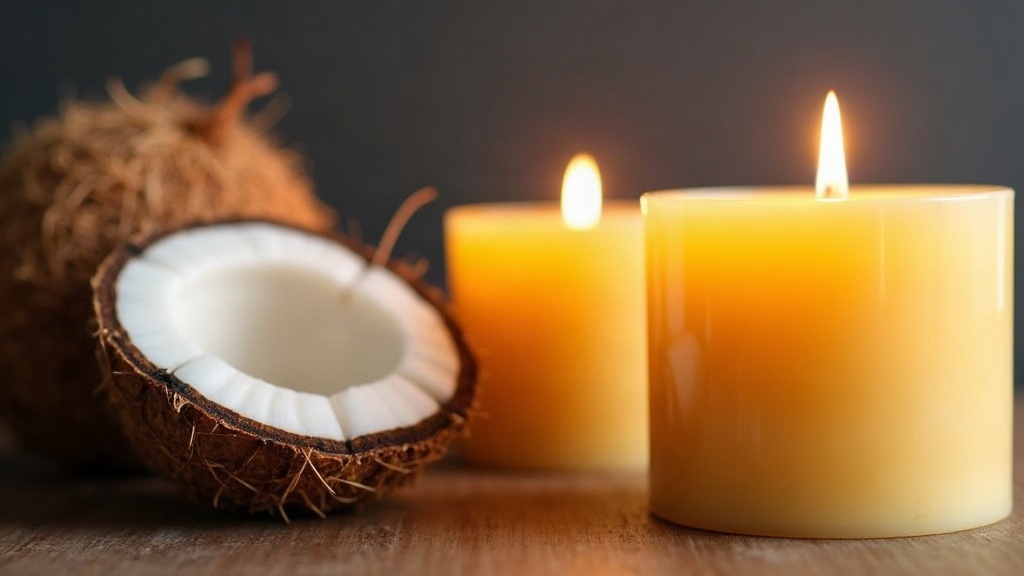
If you’re choosing between coconut wax and beeswax for container candles, here’s the short version: coconut wax burns cleaner and throws scent better, while beeswax burns longer and is thought to purify the air a bit, but it costs more and doesn’t hold fragrance nearly as well. So which one wins? That really depends on what you care about most, scent performance or burn time and natural purity.
Both waxes have built loyal fan bases among candle makers trying to steer clear of paraffin’s petroleum roots and sooty output. But they behave in pretty different ways once they’re in a jar, and picking the wrong one can leave you with tunneling, a weak scent throw, or a candle that just never performs the way you hoped.
How Each Wax Burns
Coconut Wax
Coconut wax comes from pressed coconut meat and has a naturally low melting point, somewhere around 100-110°F. That low melt point gives it a few real advantages:
- A wide, even melt pool with little to no tunneling
- Very low soot production because it burns so cleanly
- Excellent “hot throw” (the scent you smell while it’s burning) since it holds fragrance oil really well
- A soft, creamy texture that sticks to glass nicely, no air pockets or gaps
The catch? Pure coconut wax isn’t cheap, and it’s fairly soft on its own. That’s why most commercial coconut candles you’ll find on shelves are actually coconut-soy or coconut-apricot blends. Blending gives the wax more structure and keeps costs down.
Beeswax
Beeswax is a byproduct of honey production, and it has a much higher melting point, 144-147°F. It’s known for a different set of qualities:
- A naturally sweet, honey-like scent (which can clash with added fragrance)
- Negative ions released during burning, which some people claim help purify indoor air
- A long, slow burn thanks to its density
- A beautiful golden color and natural shine
The tricky part is scenting it. Beeswax’s own aroma often overpowers lighter fragrance oils, and because the melt point is so high, scent throw in a room tends to be weaker than what you’d get from coconut wax.
Soot and Air Quality Comparison
If clean burning is your main concern, coconut wax has a small edge day to day. It produces almost no black smoke or soot buildup on the jar, even with a properly trimmed wick.
Beeswax can also burn impressively clean, but only when it’s pure and unadulterated (not bleached or blended with other waxes). It’s more likely to soot up if the wick is too large or the candle sits near a draft, say by an open window or a ceiling fan. As for the “negative ions purify the air” claim, it’s popular online, but the science behind it is thin and mostly anecdotal.
Verdict on cleanliness: Coconut wax is more forgiving, especially for beginners. Beeswax can get just as clean, but it demands more careful wicking to pull it off.
Scent Throw: The Real Deciding Factor
For most people making container candles, scent throw ends up being the dealbreaker:
- Coconut wax: Strong hot throw, decent cold throw (the scent you smell when it’s unlit). It can hold fragrance loads up to 10-12% without sweating or separating.
- Beeswax: Throw ranges from weak to moderate at best. Its natural honey smell tends to clash with floral or fruity fragrances, so it works best in unscented or lightly scented candles.
If you’re making scented candles to sell, coconut wax (or a coconut-soy blend) is almost always going to outperform pure beeswax. There’s really no contest here.
Cost and Sustainability
| Factor | Coconut Wax | Beeswax |
|---|---|---|
| Price per lb | $$$ (higher) | $$$$ (highest) |
| Renewability | Byproduct of coconut farming | Byproduct of beekeeping |
| Vegan-friendly | Yes | No |
| Burn time (8oz jar) | 40-50 hours | 50-60 hours |
Beeswax typically runs 20-40% more expensive than coconut wax. And if you’re sourcing it, go for ethically harvested beeswax, since that matters a lot for bee population health. Coconut wax, on the other hand, is vegan and generally has a lighter environmental footprint tied to land use, though it isn’t regulated as tightly as beeswax production.
Which Should You Choose?
- Choose coconut wax if you want strong, reliable scent throw, minimal soot, and a smooth, even burn. It’s a great fit for scented gift and retail candles.
- Choose beeswax if you want something long-burning with a naturally sweet scent, and you’re fine with unscented or lightly fragranced candles, and the higher price doesn’t bother you.
- Consider a blend (coconut-beeswax or coconut-soy) if you want the best of both worlds, balancing scent throw, burn time, and cost. Plenty of professional candle makers lean on blends for exactly this reason.
Final Thoughts
Neither wax is “better” in some absolute sense, they’re just built for different goals. Coconut wax wins on scent performance and soot-free burning, which makes it the top pick for fragrance-forward candles. Beeswax wins on burn time and natural appeal, especially for minimalist, unscented designs. If you’re a home candle maker chasing that clean, strong-smelling burn, coconut wax (or a coconut wax blend) is the safer bet.